Teaching
Teaching is what I love most about my work. I enjoy helping students discover unexpected connections between the ancient world and contemporary culture, and seeing them develop their own ideas through discussion, writing, and presenting. Just as importantly, I value the more personal side of teaching: getting to know students, sharing a laugh, and helping them discover what genuinely excites and motivates them.
Before entering academia full-time, I worked as a high school teacher in Latin and Greek, an experience that strongly shaped my approach to teaching. Managing groups of thirty teenagers taught me the importance of creating an environment in which students are not merely an ‘audience,’ but active participants in the search for knowledge. It also taught me that complex ideas and theories can be made accessible without simplifying them.
My teaching style is highly interactive and research-driven. I regularly work with discussion-based seminars, inquiry-based learning, flipped classroom formats, and, where possible, excursions to relevant sites in order to encourage active participation and critical thinking.
Creating the Classics
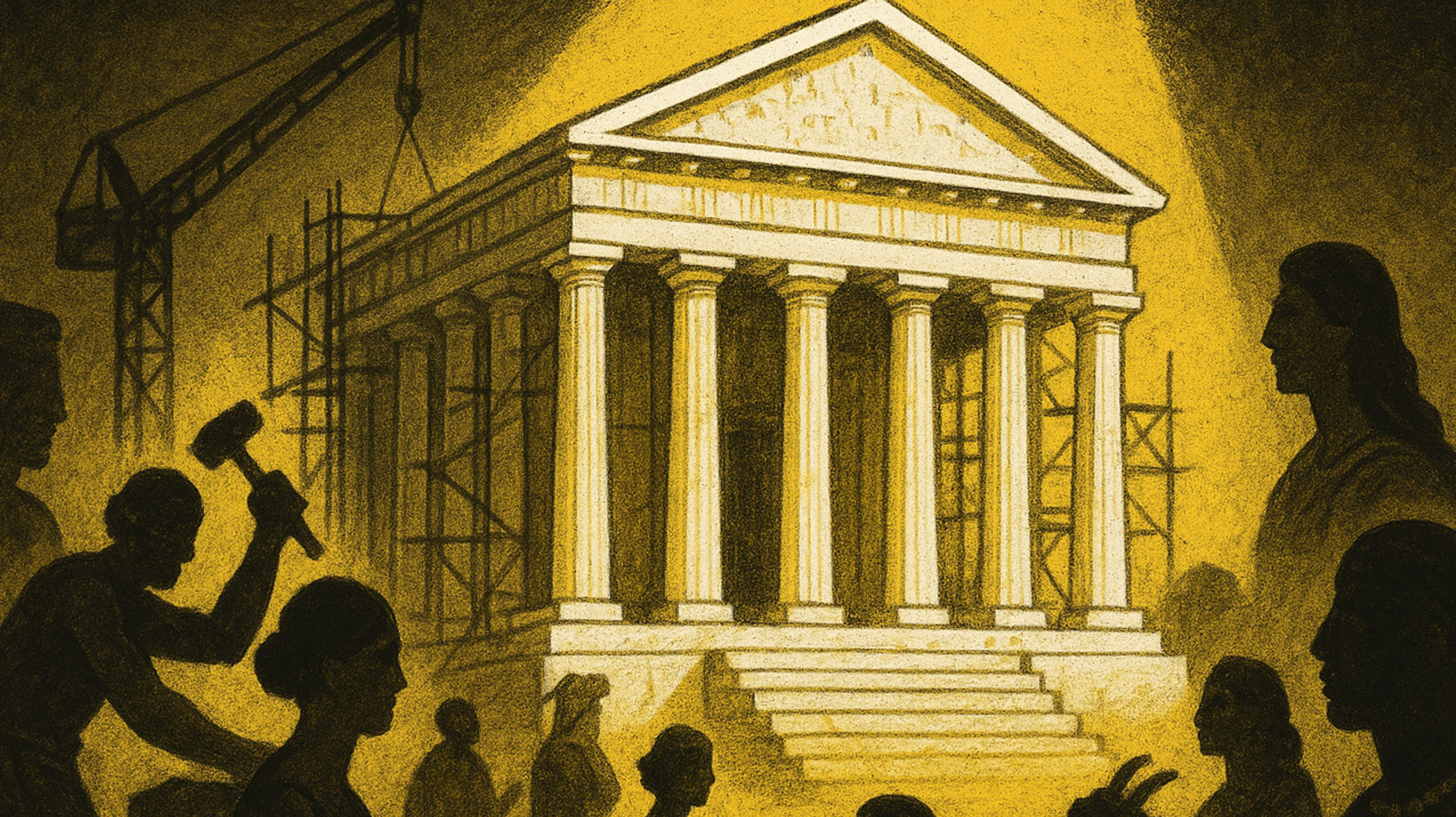
This is one of my favourite courses, which I developed for the MA Cultural History & Heritage and which grows directly out of my own research on classical reception and the contemporary political uses of antiquity. The course examines how the idea of “the classical” is constructed, contested, and reinterpreted across time, and how antiquity continues to function as a powerful reference point in literature, politics, art, and popular culture.
Teaching this course is an essential part of my research practice. Through ongoing discussion with students and their engagement with both scholarly and applied contexts, I continually refine and expand my thinking about how antiquity operates in the present.
The course foregrounds the practical side of reception: how historical narratives are actively shaped in museums, heritage institutions, and other public-facing cultural projects. In this sense, it functions as a tutorial for students’ graduation projects, in which academic research is combined with hands-on collaboration with external partners. Students develop both an MA thesis and a practice-based output, applying their research to real-world questions of how the ancient past is presented, communicated, and made meaningful for contemporary audiences.
Thinking Through Mythology
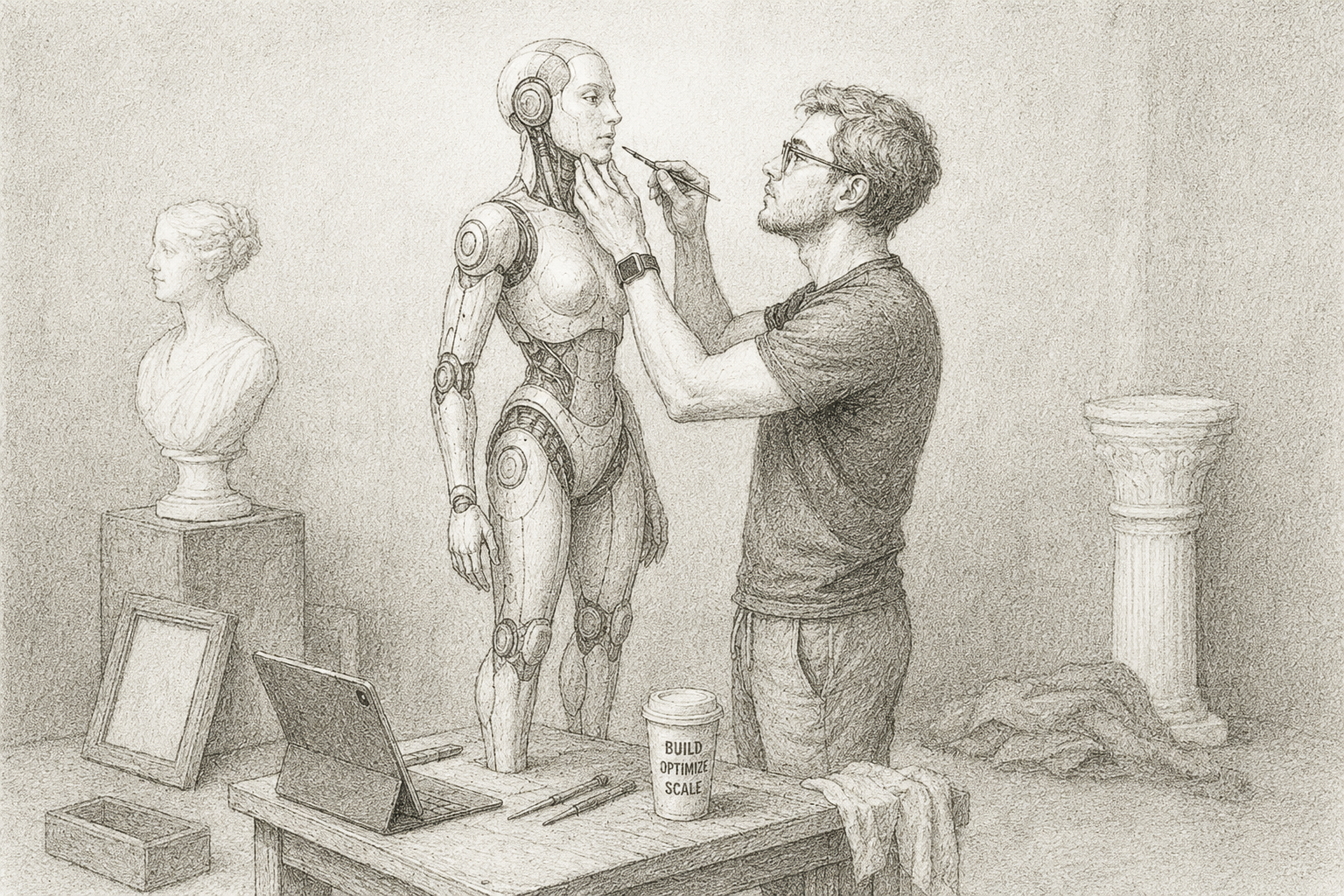
This is another of my favourite courses, which I developed and teach at the Institute for Interdisciplinary Studies (UvA & VU). It ties to my research on myth in popular culture and contemporary social and political debates.
In the course, we connect ancient myth, modern media, and societal debates to explore how mythological symbols and narrative patterns are used to ‘think through’ issues of gender, psychology, and technology in today’s world.
In each seminar, we focus on a specific myth. We explore its symbolism by studying an ancient text in translation, discuss its applicability to modern society via scholarly literature, and consider its power as a critical tool by examining its receptions in contemporary film, literature, and art.
Examples we study in the course include Narcissus as a figure for contemporary narcissism, Medusa in feminist reinterpretations and activism, Pygmalion in debates on beauty standards and love in the digital age, and Prometheus in discussions about technology and innovation.
A special part of the course is its collaboration with film theatre De Uitkijk. In a screening series called Cinema Mythologica, several mythologically themed films (that are required viewing for the course) are shown there, allowing students to experience modern receptions of classical myth on the big screen. The screenings take place in November-January and are open to the public.
Other courses and thesis supervision
At Utrecht University, I also contribute to the following teaching activities:
-
This course offers a broad introduction to the history of the Greco-Roman world in its wider Mediterranean and Near Eastern context (ca. 800 BCE–500 CE), covering its main political, social, religious, and cultural developments. Alongside this historical overview, students work with primary sources and material culture, and engage with current scholarly debates. We also discuss how ancient history is constructed and interpreted in the present, from archaeological heritage and museums to modern political narratives and popular culture, highlighting how our understanding of antiquity is shaped by ongoing processes of reception.
-
This course offers an overview of European history between roughly the fifteenth and eighteenth centuries, exploring the political, economic, social, and cultural transformations that shaped the foundations of the modern world. Alongside major developments such as the Reformation, scientific revolution, and Enlightenment, the course encourages a critical perspective on ideas of “progress” and modernization. In my seminars, I pay particular attention to the usage and construction of classical traditions in the early modern period: how antiquity was rediscovered, appropriated, and reimagined in politics, art, scholarship, and ideas about society.
-
This course introduces students to the study of history as an academic discipline, exploring how historians interpret, construct, and debate the past. Through historiography and a range of theoretical approaches, students reflect on how different perspectives produce different versions of history, and how historical narratives are shaped by the questions and concerns of their own time. Particular attention is paid to the relationship between academic history and broader public understandings of the past, encouraging students to think critically about how history functions in contemporary culture and society.
-
I supervise BA and MA theses at the intersection of classical reception, cultural history, and media studies, particularly on the afterlife of antiquity in modern culture. Topics often include mythology, political uses of the past, and the reception of classical literature. I also supervise projects on Greek and Roman history and literature more broadly, as well as receptions of antiquity in other historical periods. In supervision, I encourage students to combine strong historical research with critical reflection on how the past is continuously reinterpreted in the present.
-
My internship supervision focuses on students working within museums, heritage institutions, research centres, and other cultural or societal organisations engaged with the construction and interpretation of the past. Interns typically work on projects related to heritage communication, public history, cultural representation, or critical reflection on historical narratives. Supervision supports the connection between academic training and professional practice, with attention to how historical knowledge is translated into public-facing contexts and how institutions actively shape understandings of the past in the present.
Available for talks, interviews, and collaborations.
Contact
Location
Utrecht
k.vacano@uu.nl